
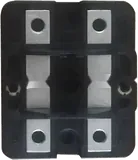
 Insert molding
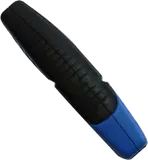 Overmolding
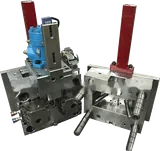 Unscrewing molds
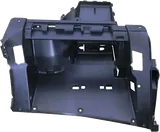 Automotive
 Electronics
 Home appliance
 Industrial equipment
 Medical devices
 Machinery & automation
Injection molding FAQ
Buyers of molds and molded parts tend to ask the same things before they send a drawing. Below are direct answers from Nodinson Plastic Mould Co., Ltd, a mold maker in Shenzhen since 2001, about quotes, tooling, molding, machining, quality and shipping. If your question is not here, send it to sales@precisemoulds.com or call +86 755 8951 6139.
Company and capabilities
Who is Nodinson?
Nodinson Plastic Mould Co., Ltd is a mold maker and plastic molding company founded in Shenzhen in 2001. We design and build injection molds, mold plastic parts and machine metal components for manufacturers in Europe, the USA and Asia, from a 3,000 m² factory in Guangming District.
What services do you offer?
We offer injection mold making, plastic injection molding, insert molding, overmolding, unscrewing molds, metal machining, mold components, part and mold design, reverse engineering and prototypes. You can use one service or combine them, from the first drawing to the shipped part.
Which industries do you work with?
Our projects include automotive, electronics, home appliance, industrial equipment, medical device and machinery and automation parts. We also build molds for power tools and for food containers and packaging. The project pages on this site show examples shared with customer permission.
Is your factory ISO certified?
Yes. Our quality system is certified to ISO 9001:2015.
Do your engineers speak English?
Yes. You can discuss your project directly with our engineers in English, by phone or by email.
Quotes and getting started
What do you need from me to prepare a quote?
Tell us about the part, the expected volume and the mold standard you need, and attach your drawings. Our engineers check moldability and tolerances, then propose steel, cavities, runner and mold standard before quoting tooling and part price.
Which file formats do you accept?
We accept STEP, IGES, STL, Parasolid (X_T), DWG, DXF and PDF drawings. A physical sample, a sketch or photos also work, because our engineers can scan and redraw the part through our reverse engineering service.
Is the design review free?
Yes. Every quotation comes with a free design check, a DFM report that shows any risks we found. Problems are cheaper to solve at this stage than after the steel has been cut.
Will my drawings stay confidential?
Yes. Your drawings are used only for your quotation and are never shared. We sign your NDA before you send drawings, and we treat your designs and models as confidential during the project.
How long does a project take?
Lead time depends on the mold and on your quantity, so we confirm it with the quotation. Because mold making and molding are both done in-house, we control the schedule, and our on-time delivery rate is 95%.
Is there a minimum order quantity?
There is no fixed minimum. Short runs of hundreds of parts are common, and we design the mold to suit the quantity.
Molds and tooling
What types of molds do you build?
We build single-cavity, multi-cavity, family, unscrewing, 2K and hot-runner molds. Mold weight ranges from 98 kg to 10 tonnes, with a maximum mold size of 1700 × 1500 mm.
Which mold standards and steels do you use?
Molds are built to HASCO, DME, LKM or the nearest DIN standard, or to your own data sheet. Typical steels include LKM 2767, 2344, 2311, 738H and 838H, ASSAB 718H and S136, DIN 1.2344 ESR and 1.2083 ESR, AISI H13, 420 stainless and Finkl P20.
Can you follow our in-house mold standard?
Yes. Send your mold specification and we will follow it for steel, components, hot runner brand, cooling, ejection, marking and documentation.
Who owns the mold?
The customer who pays for the mold owns it. It is marked with your part number and can be shipped to your own plant at any time, or kept in our factory for production.
Is every mold tested before shipment?
Yes. Every mold is run on our presses at the first trial (T1). You receive samples and a first article inspection report, and the mold ships after your approval. Up to 90% of our molds pass at T1.
How long will a mold last?
With proper maintenance, production molds typically run from hundreds of thousands to over a million shots. For short runs we match mold life to the real quantity, so you do not pay for tooling life you will not use.
How do you keep mold cost down without cutting quality?
We design compact molds with standard components, choose steel for the real volume and fix part design issues before machining, so the mold is not reworked after the trial.
Can you ship the mold to our own molding plant?
Yes. Many customers in Europe and the USA buy the tool only. Every mold is cleaned, rust-protected, marked and checked against a shipment checklist, then shipped with drawings, a spare-parts list and the T1 process sheet.
Plastic molding
What press sizes do you have?
We run fourteen horizontal presses from 80 to 400 tonnes, including two JSW precision machines from Japan, plus two vertical presses for insert and two-shot molding. We confirm clamp force and shot size during the quotation.
What size of part can you mold?
Molded parts range from about 1.2 g to 10 kg. The thinnest wall we mold is 0.5 mm, depending on flow length and resin.
Which plastics do you mold most often?
We most often mold glass-filled PA66 for structural automotive and appliance parts, ABS and PC for housings and covers, PP for medical and interior parts, POM for mechanical parts, and TPE or TPU for overmolding.
Do you mold low volumes as well as high volumes?
Yes. Quantities range from one prototype to thousands or millions of parts. For short runs we use family molds, P20 cavities cut into the plates or exchangeable inserts. For high volume we use hardened steel, hot runners and multi-cavity layouts.
Can you match a color?
Yes, with masterbatch or pre-colored resin, approved against your sample or a Pantone or RAL reference on the T1 parts.
Can you assemble or pack parts to our instructions?
Yes. Parts can be packed and labelled and, where needed, assembled with inserts or other components according to your instructions. Parts are inspected before shipment.
Insert molding, overmolding and threaded parts
What can be insert molded?
Stamped terminals, pins, threaded brass or stainless inserts, steel frames, bushings and pre-molded plastic parts can be insert molded. The insert must withstand molding temperature and pressure. We machine inserts in-house, source standard ones or mold around yours.
What is the difference between overmolding and insert molding?
Overmolding bonds a second plastic, usually a soft TPE or TPU, over a plastic substrate. Insert molding forms plastic around a metal or pre-made component.
Can overmolding create a waterproof seal?
The soft layer can form gaskets and seals at joints. Full water resistance depends on the design of the whole product, which we review in the DFM stage.
When do I need an unscrewing mold?
Unscrewing suits full, deep threads, external threads and glass-filled materials. A collapsible core suits internal threads of limited depth and can be cheaper for simple caps.
Design, prototypes and reverse engineering
Can you redraw a part from a physical sample?
Yes. We scan or measure the sample, build a 3D model, correct it for molding and send it to you for approval before mold design starts.
Do you provide Moldflow reports?
Yes, for filling, cooling and warpage, when the part geometry or resin makes the analysis worthwhile. The results are shared with the DFM report.
Which prototype process should I choose?
SLA suits detailed appearance models, SLS suits functional nylon parts, vacuum casting suits small batches in production-like materials, and CNC suits accurate functional parts in plastic or metal.
Who owns the design files?
Designs developed for your product belong to you, and we treat your drawings and models as confidential.
Metal machining
What volumes do you machine?
We machine from a single prototype to thousands of parts per order, including regular repeat orders. Our engineers design fixtures to reduce setups and cost on higher volumes.
What tolerances can you hold?
Mold components are machined to 0.01 mm and molded parts are held to 0.02 mm on critical dimensions, verified on CMM. Steel components can reach 0.005–0.01 mm. We confirm the achievable tolerance per feature during the DFM review.
Can you machine hardened steel?
Yes, by grinding, EDM and wire cutting after heat treatment, which avoids distortion on finished features.
Quality
Do you provide a first article inspection report?
Yes. Every T1 sample set comes with a first article inspection report measured against your drawing tolerances. We also follow the quality data sheet you supply, including inspection frequency and report format.
Which measuring equipment do you use?
We use CMM, a projector, height gauges, micrometers, calipers and thread gauges, plus hardness testing for steel.
Do you supply steel and material certificates?
Yes. We buy steel from authorised suppliers such as ASSAB and Swiss Steel Group, and the material and heat-treatment certificates ship with the mold. For molded parts, resin certificates and batch records are kept for each production lot.
Do you mold in a clean room?
Our standard molding workshop operates under ISO 9001:2015. For clean-room requirements, we commonly build the mold and ship it to your clean-room molding facility.
Shipping and after-sales
Where do you ship?
We ship molds and parts to customers in Europe, the USA and Asia. Parts are packed according to your packing instruction.
What documents come with a mold?
Each mold ships with drawings, a spare-parts list and the T1 process sheet, along with the material and heat-treatment certificates.
What support do you offer after delivery?
Our after-sales team supports mold maintenance and modifications remotely and can supply spare inserts. Contact us at sales@precisemoulds.com.
Have a part that needs a mold?
Send a drawing and get engineering feedback with your quotation.