
 Insert molding
 Overmolding
 Unscrewing molds
 Automotive
 Electronics
 Home appliance
 Industrial equipment
 Medical devices
 Machinery & automation


Overmolding
Overmolding
Overmolded Plastic Part for Electronic Devices
ABS housing with a TPE soft-touch layer for a handheld electronic device, two-cavity H13 tooling.
ABS, TPEAISI H132 cavities
Engineering details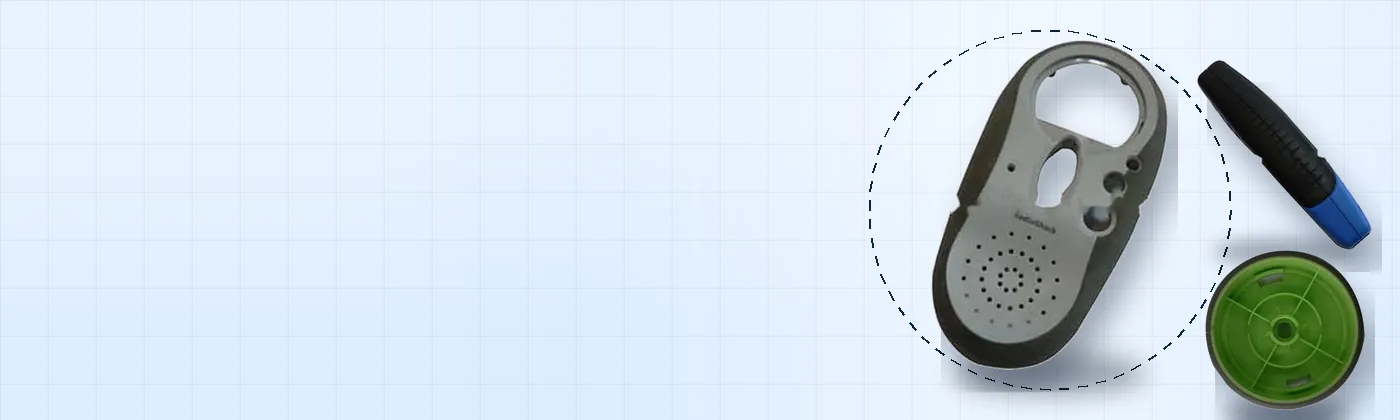
4 typical projects · Overmolding Parts
Soft-touch grips, seals and protective layers in TPE or TPU, bonded to rigid ABS, PC or nylon substrates in the mold. One part, no glue, no assembly.
ABS housing with a TPE soft-touch layer for a handheld electronic device, two-cavity H13 tooling.
ABS/TPE two-material handles for home appliances and tools, built to HASCO or DME standard.
PC food-box lid with a TPU overmolded seal, two-cavity H13 overmold tooling.
ABS grip with a TPU overmold for a medical handpiece, two-cavity H13 tooling.
Overmolding molds a second material over a first one. Usually a rigid substrate gives structure and a soft TPE or TPU layer adds grip, comfort, sealing or impact protection. Because the bond forms in the mold, there is no glue line to fail and no loose part to assemble.
| Substrate | Soft material | Typical use |
|---|---|---|
| ABS, PC/ABS | TPE, TPU | Tools, appliances, electronics, medical |
| PC | TPU | Food containers, clear housings |
| PA6 / PA66 | Modified TPE | Heavy-duty and automotive handles |
| PP | TPE | Household and outdoor products |
| Metal | TPE, TPU | Needs mechanical interlocks |
Overmolding in two separate molds has a lower tooling cost and suits moderate volumes. Two-shot (2K) molding produces both materials in one machine and one rotating mold, with lower part cost at high volume. We have a vertical press set up for 2K work and can advise which route fits your volume.
Overmolding bonds a second plastic, usually a soft TPE or TPU, over a plastic substrate. Insert molding molds plastic around a metal or pre-made component.
TPE and TPU grades chosen for compatibility with the substrate, in hardness from very soft to semi-rigid, including food-contact and medical grades.
With compatible materials and correct processing, the bond usually exceeds the strength of the soft material itself. We test it on T1 samples.
The soft layer can form gaskets and seals at joints. Full water resistance depends on the whole product design, which we review in DFM.
Get a quote
Share a 3D file, 2D drawing, sample photo or sketch. A mold engineer — not a sales robot — checks moldability before we quote tooling and part price.


