
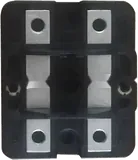
 Insert molding
 Overmolding
 Unscrewing molds
 Automotive
 Electronics
 Home appliance
 Industrial equipment
 Medical devices
 Machinery & automation


Insert molding
Insert molding
Insert Molded Switch Parts
Two-cavity H13 insert mold for 15% glass-filled PA66 automotive switch housings with molded-in terminals.
15% GF filled PA66AISI H132 cavities
Engineering details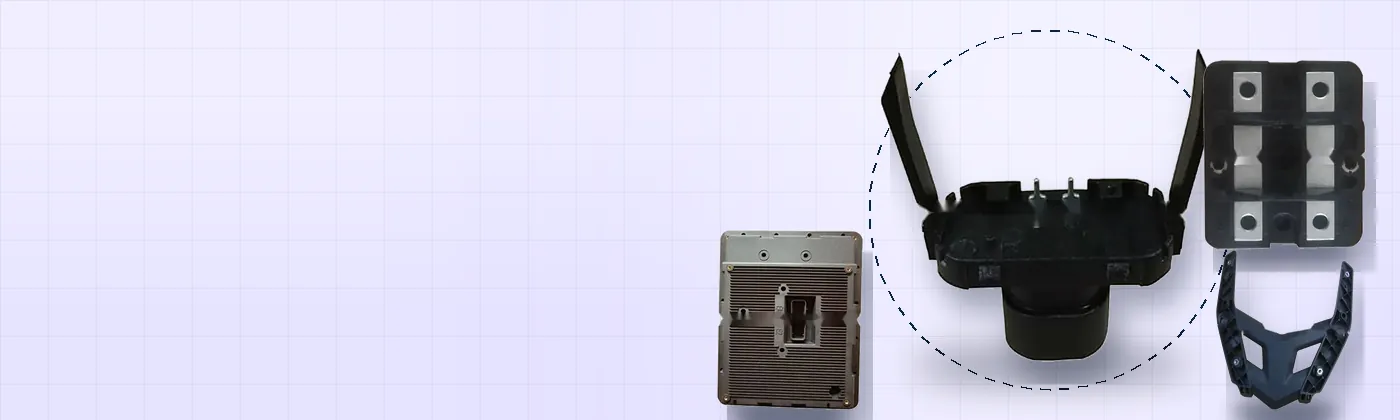
4 typical projects · Insert Molded Parts
Metal terminals, threaded brass nuts and steel frames molded directly into plastic, on horizontal presses or vertical presses with shuttle cores, with custom loading tools for fast, accurate insert placement.
Two-cavity H13 insert mold for 15% glass-filled PA66 automotive switch housings with molded-in terminals.
20% GF PA66 insert-molded parts for power equipment, run in a two-cavity HASCO tool on vertical or horizontal presses.
30% GF PA66 appliance frame with metal inserts, two-cavity H13 tool and loading fixtures.
ABS electronic base with threaded brass inserts, single-cavity H13 mold to HASCO standard.
Insert molding places metal or pre-made components into the mold before injection, so the plastic forms around them. The result is one part with no assembly step, a stronger joint than press-fitting or gluing, and inserts held exactly where the design needs them.
Every insert part starts with loading. If loading is slow or irregular, molten resin waits in the nozzle and cools, causing flow marks, weld lines and short shots. We solve this with:
Our vertical injection presses with two shuttle cores let the operator load one core outside the press while the other is molding. This suits loose, numerous or heavy inserts that would move in a horizontal mold. Horizontal presses are faster for parts that drop automatically and inserts that sit securely.
Flash on terminals or in threads causes assembly failures. Because we machine both the inserts and the mold components, we control the fit on both sides, and we check every insert position and thread at T1.
Stamped terminals, pins, threaded brass or stainless inserts, steel frames, bushings and pre-molded plastic parts. The insert must withstand molding temperature and pressure.
Gravity holds inserts in place, there is easy access for loading, and shuttle cores let loading happen outside the press while molding continues.
Precise insert pockets, positive location features and a tight fit between insert and mold, all machined in our own shop.
Yes. We machine brass and steel inserts in-house or source standard inserts, and mold around customer-supplied inserts too.
Get a quote
Share a 3D file, 2D drawing, sample photo or sketch. A mold engineer — not a sales robot — checks moldability before we quote tooling and part price.


