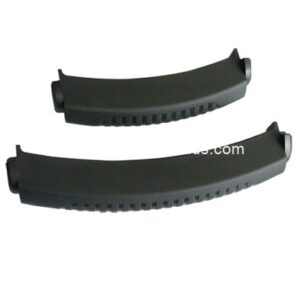
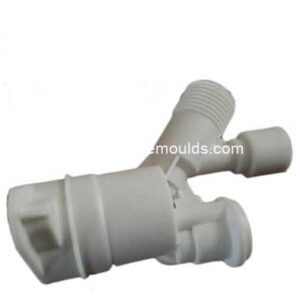
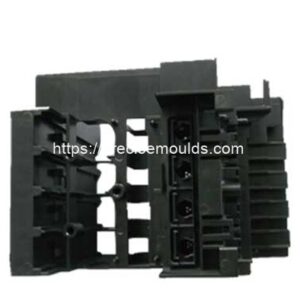
Overmolded medical parts
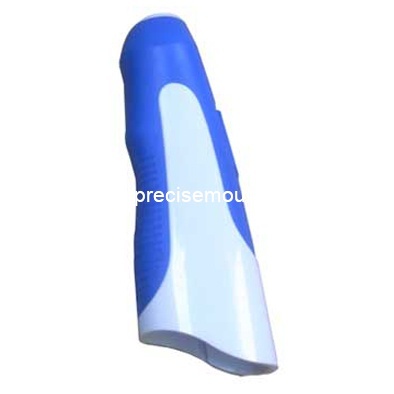
China injection mold maker providing mold building service for overmolded medical part
| Part material: | ABS and TPU |
|---|---|
| Mold manufacturer: | China |
| Cavity/core steel: | AISI H13 |
| Runner system: | Cold runner |
| Cavity No: | 2 cavities |
| Customer type: | Auto injection molding company |
| Processing: | Plastic molding |
| Mold standard: | HASCO |
Overmolded medical parts are essential components in the healthcare industry, known for their durability, waterproof nature, and sensitivity in touch compared to other molded plastic parts produced through standard plastic molding processes. These parts play a crucial role in medical devices, ensuring not only functionality but also patient safety and comfort. For instance, overmolded grips on surgical instruments provide surgeons with enhanced control, while the waterproof seals in diagnostic devices protect sensitive electronic components, thereby prolonging their lifespan and reliability. Furthermore, these components can be tailored to meet specific requirements, such as biocompatibility, allowing them to be used in various medical applications, from diagnostic tools to surgical equipment.
The advancements in overmolded medical parts technology have led to innovative solutions that address common challenges faced in the healthcare sector. For instance, the use of antimicrobial materials in overmolded components helps reduce the risk of infections in hospitals. These materials are engineered to inhibit bacterial growth, making them ideal for use in environments where hygiene is critical. Additionally, the integration of sensors within overmolded parts has paved the way for smart medical devices that can monitor patient health parameters in real-time. Such innovations not only improve patient outcomes but also streamline healthcare processes, showcasing the versatility and importance of overmolded medical parts in modern medicine.
Furthermore, the customization capabilities offered by overmolding are invaluable. Manufacturers can create parts that are specifically designed to fit the unique contours of the human body, enhancing comfort and usability for patients. For example, custom overmolded handles on medical devices can be designed to accommodate different grip sizes, which is especially beneficial in pediatric or geriatric care. This level of personalization not only improves the patient experience but also ensures that medical devices are more effective and easier to use, ultimately contributing to better healthcare outcomes.
The manufacturing process for overmolded parts has also evolved, with the introduction of advanced technologies such as computer-aided design (CAD) and 3D printing. These technologies allow for rapid prototyping and testing, enabling manufacturers to iterate designs quickly and efficiently. This agility is essential in the fast-paced medical industry, where time-to-market can be a critical factor. By utilizing these modern methods, companies can innovate more rapidly, offering new and improved overmolded medical parts that respond to the latest healthcare demands.
In addition, the recyclability of materials used in overmolded medical parts is becoming a key consideration in the industry. As healthcare organizations strive to reduce their environmental impact, the use of sustainable materials in overmolding processes is gaining traction. Manufacturers are exploring bio-based plastics and recyclable composites that do not compromise on performance. This shift not only aligns with global sustainability goals but also appeals to consumers who are increasingly prioritizing eco-friendly products.
Finally, the regulatory landscape for medical devices influences the development of overmolded parts. Compliance with standards set by bodies such as the FDA is crucial. Manufacturers must ensure that their overmolded components meet stringent safety and performance guidelines. This necessitates thorough testing and validation processes, which can be resource-intensive but ultimately lead to higher quality products. As the medical device industry continues to evolve, staying abreast of regulatory changes will be essential for companies involved in the production of overmolded medical parts.
Overmolding involves a more intricate procedure than double injection molding; it requires the precise placement of the overmolded part within another mold for accurate molding. This technique allows manufacturers to combine different materials, optimizing the performance and functionality of medical devices. For example, combining soft, flexible materials with rigid substrates can lead to enhanced user interaction while maintaining structural integrity. Moreover, the process can significantly reduce assembly time and costs, as it allows for the integration of multiple components into a single part. This efficiency is particularly valuable in the production of high-volume medical devices, where consistency and quality are paramount. Industries are seeing a shift towards overmolded designs that not only meet regulatory standards but also enhance user experience.